Oven Not Heating? Here’s What’s Actually Wrong
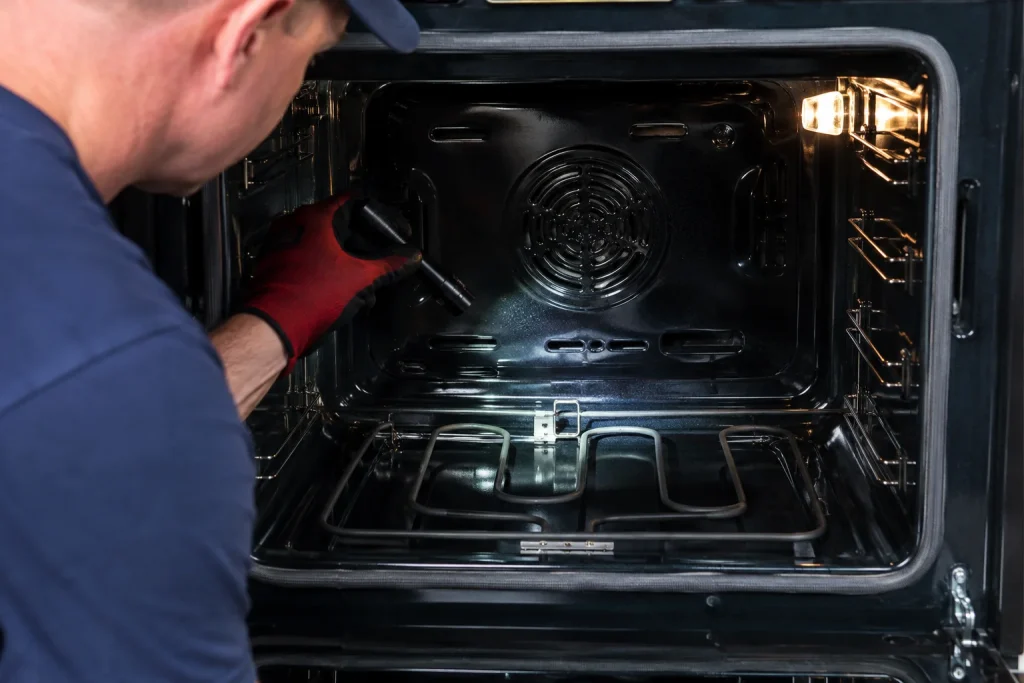
An oven that won’t heat is one of the most common appliance complaints, and one of the easiest to misdiagnose. The display works, the controls respond, everything looks normal. But nothing gets hot.
The frustrating part is that the symptom looks identical no matter which component actually failed. A dead heating element and a failed igniter can both leave you with a cold oven and no obvious clue why. Before you assume the worst, or pay for a part that wasn’t the problem, it helps to understand what’s actually happening inside the appliance.
Quick answer:
If your oven display works but produces no heat, the cause is almost always the heating element (electric) or the igniter (gas), but a failing temperature sensor or control board can cause the same symptom. Check which type you have first, then look for the specific signs below before calling for repair.
Start With One Question: Gas or Electric?
The two systems fail in completely different ways, so this determines everything else you check.
|
Questions |
Electric Oven |
Gas Oven |
|---|---|---|
|
Heat source |
Bake/broil elements |
Burner + igniter |
|
Common failure point |
Element, sensor, control board |
Igniter, gas valve |
|
Visual check |
Element should glow orange when heating |
Igniter should glow, then burner should light within ~90 sec |
|
Safety note |
Standard electrical caution |
Stop immediately if you smell gas |
Electric ovens heat using a bake element (bottom) and a broil element (top). If either one fails, or if the wiring or thermal fuse feeding it fails, that half of the oven stops producing heat.
Gas ovens use an igniter to open a safety valve and light the burner. If the igniter is weak, it may glow without ever generating enough current to open that valve, so the burner never lights, and the oven never heats.
What to Check on an Electric Oven
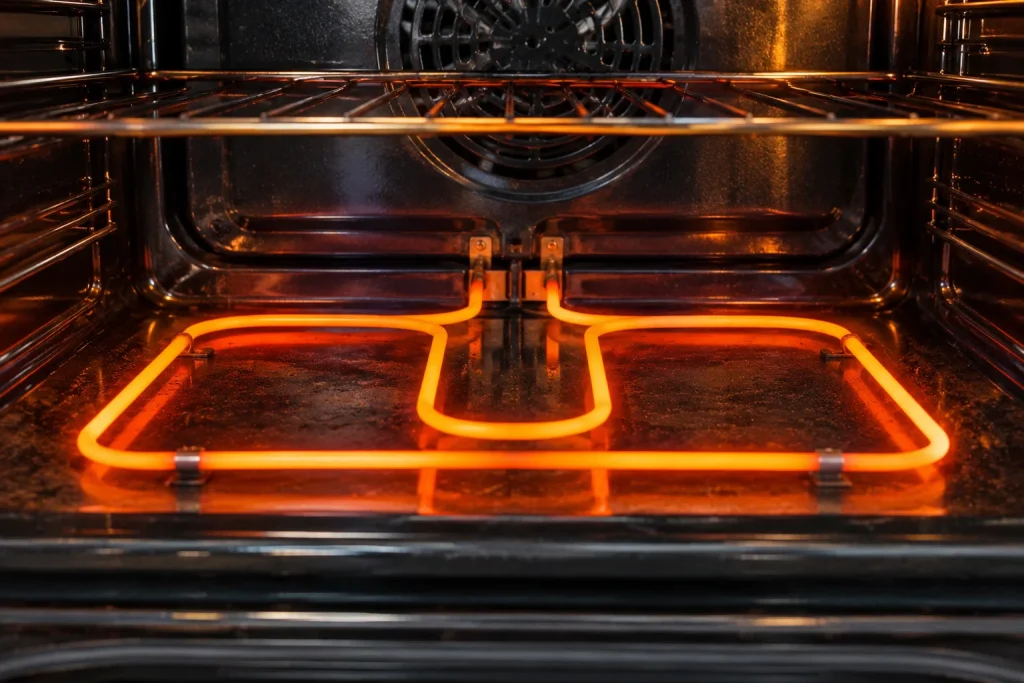
Look at the bake element. With the oven off and cool, open the door and look at the bottom element. A healthy element glows an even orange when the oven is heating. If you can safely run a quick bake cycle and watch:
- No glow at all: the element itself has likely failed, or it isn’t getting power
- Visible blistering, a split, or a burned-through section: the element has physically failed and needs replacement
- Glows fine but the oven still runs cold or takes far too long: the problem may be downstream, a failing temperature sensor or a control board issue, not the element itself
Check the breaker. Ovens are often on a dedicated high-amp circuit. A partially tripped breaker can sometimes allow the display to work while cutting power to the heating circuit specifically.
Note the pattern. Does it never heat at all, or does it start and then stop? A full failure points toward the element or its power supply. Heating that starts and cuts out early often points toward a thermal fuse or a temperature sensor sending bad data to the control board.
|
What you observe |
Likely cause |
|---|---|
|
No glow at all |
Element failure or no power to the circuit |
|
Visible crack, blister, or burn mark |
Element has physically failed |
|
Glows fine, oven still runs cold/slow |
Temperature sensor or control board |
|
Heats briefly, then stops |
Thermal fuse or sensor issue |
What to Check on a Gas Oven
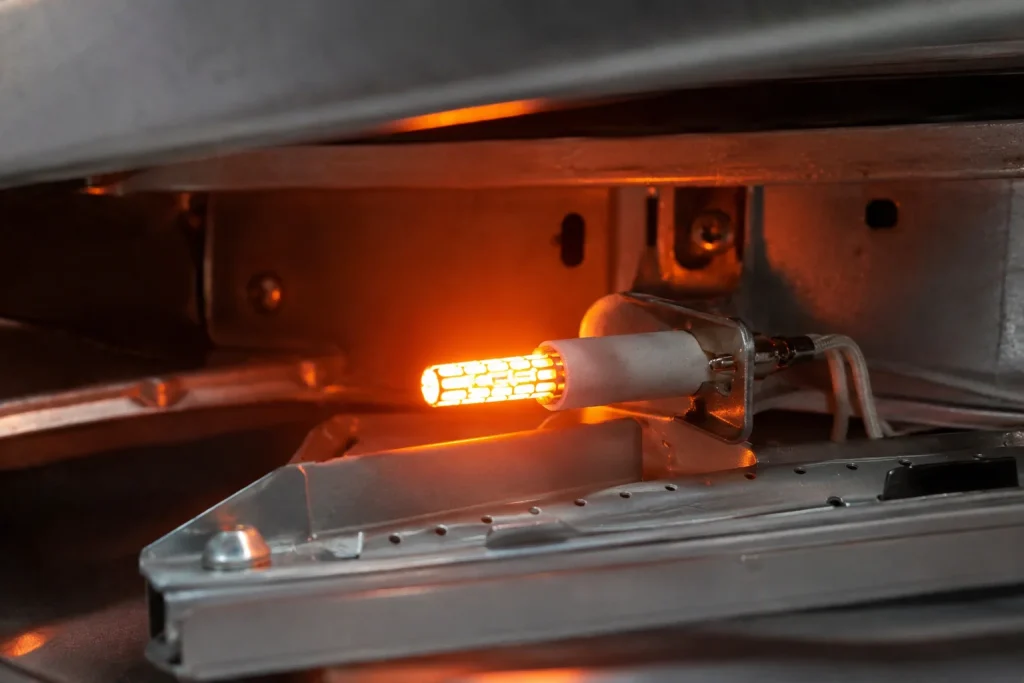
Listen and watch during a bake attempt. A normal ignition sequence: you’ll hear gas, then see the igniter glow, then hear or feel a soft whump as the burner lights, usually within 30 to 90 seconds.
- Igniter glows but the burner never lights: this is the classic sign of a weak igniter. It’s drawing enough current to glow but not enough to open the gas safety valve
- No glow, no sound at all: check power to the oven and the ignition control module
- Burner lights, then the flame goes out and won’t restart: possible safety valve or thermocouple-equivalent issue
|
What you observe |
Likely cause |
|---|---|
|
Igniter glows, burner never lights |
Weak igniter, most common cause |
|
No glow, no sound |
Power or ignition control module issue |
|
Lights, then flame goes out |
Safety valve or sensing issue |
|
Any gas smell |
Stop immediately, call a professional |
Safety note: if you smell gas at any point during this check, stop immediately. Turn off the oven, don’t attempt any further troubleshooting yourself, and call a professional right away. Gas components should always be diagnosed and repaired by someone qualified to work on them safely.
Two Problems That Look Like “Not Heating” But Aren’t
A door that won’t seal. If heat is escaping around the door, the oven may actually be heating just fine but never reaching or holding the set temperature, which can feel identical to “not heating” from the outside.
A drifting temperature sensor. In rare cases the oven is heating normally, but the sensor is feeding the control board inaccurate readings, causing it to shut the heating cycle off early. The oven technically works, it’s just being told it’s already hot enough when it isn’t.
Quick Reference: Symptom to Likely Cause
|
Symptom |
Oven type |
Most likely cause |
|---|---|---|
|
No heat, no glow |
Electric |
Failed element or no power |
|
Element glows, still runs cold |
Electric |
Sensor or control board |
|
Igniter glows, no ignition |
Gas |
Weak igniter |
|
No igniter glow at all |
Gas |
Power or control module |
|
Heats but temperature feels off |
Either |
Door seal or sensor drift |
|
Any gas smell |
Gas |
Stop, call a professional immediately |
When It’s Time to Call Someone
The checks above will usually tell you which system is likely involved, heating components, ignition, or temperature sensing, even if they can’t tell you the exact failed part. That’s genuinely useful information to have ready when you call for service, because it narrows the diagnosis time considerably.
You should stop troubleshooting and call a professional if:
- You smell gas at any point
- The issue involves anything beyond a visual check of the element or a listen-and-watch of the ignition sequence
- You’re not comfortable working near a live electrical circuit or gas line
A proper diagnosis tests the actual components tied to your specific symptom rather than replacing parts based on a guess, which matters, because a control board replacement and a $30 igniter can present almost identically from the outside.
Dealing with an oven that won’t heat in Ventura?
Dealing with an oven that won’t heat in Ventura? Our team diagnoses gas and electric ovens before recommending any repair, so you know exactly what failed and what it costs before any work begins.